
Menu
Services
Blog
- Software
- Blockchain
- Web3 product
- Smart Contracts
- Mobile app
- Web platform
- AWS Cloud
- NFT marketplace
- DeFi
- Fintech
- AI product
- dApp
- Crypto wallet
Rumble Fish helps entrepreneurs build and launch bespoke digital products.
We take care of the technology, so you can focus on your business
Join the ecosystem
of our satisfied customers:


of our satisfied customers:
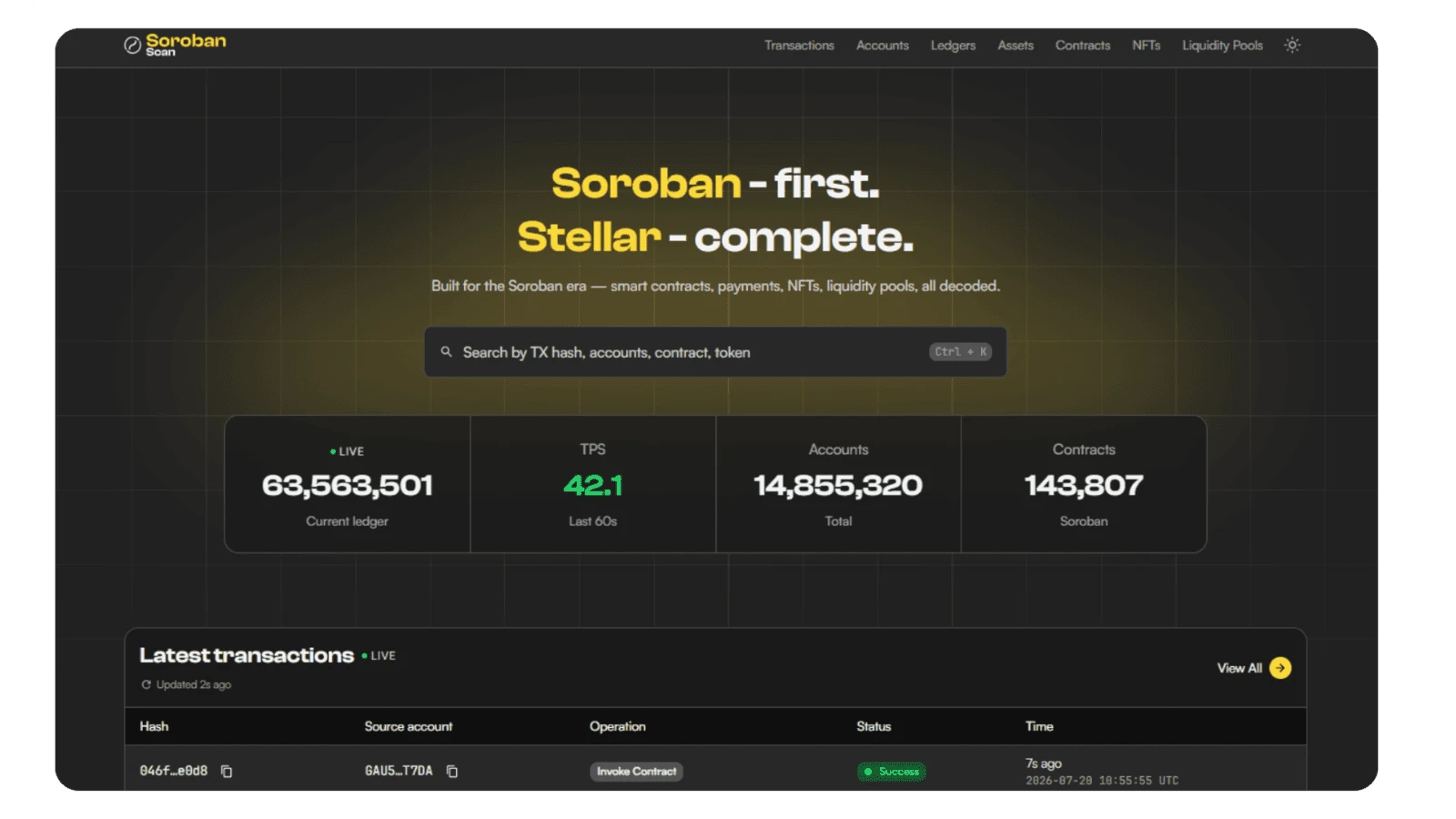
Built with Stellar Community FundSoroban Scan is live on mainnet!Built for the Soroban era - smart contracts, payments, NFTs, liquidity pools, all decoded.Try it now!
Who we are
Hi there! We're Rumble Fish - a team of world-class experts in bespoke software development. Our engineers are highly skilled in blockchain, cloud solutions, and defi/fintech development. Our strength and pride is the ability to take ownership of the entire development process and be a true partner and advisor for our customers. Our mission is to craft state-of-the-art digital products using battle-tested technologies. Try us!




Meet the team
The engineers, strategists, and problem-solvers behind every Rumble Fish project.
40uniquely skilled devs
1pet-friendly office
9years in business
57projects
999passion for coding
What do we do?
Software Development Services and Skills for your needs
Our team is well-versed and experienced in various blockchain development tools and technologies. Our unique skillset allows us to be at the forefront of Web3 development services so if you’re looking for a trusted IT partner to boost your decentralized product - look no further!
We deliver production-ready zero-knowledge proof solutions that actually ship to mainnet, specializing in custom ZK development, rollup scaling solutions, and privacy-preserving smart contracts that reduce processing times from hours to minutes. Try us!
We build fast, compliant, and cost-effective blockchain solutions on the XRP Ledger. From payment systems and tokenization platforms to enterprise DeFi applications, our team delivers production-ready systems that work when billions are on the line.
Rumble Fish builds Stellar and Soroban software for startups, enterprises, and institutions. We develop payment rails, tokenization platforms, smart contracts, and DeFi applications that draw on Stellar's speed, low costs, and financial infrastructure.
We build smart contracts that handle real business complexity without the usual blockchain headaches. From DeFi protocols to custom on-chain systems, we deliver production-ready solutions that scale.
Decentralized Finance (DeFi) development requires an extensive amount of blockchain knowledge, as well as a great understanding of financial mechanisms. We’ve got both that bases covered! Our team has successfully built an impressive number of DeFi products like cryptocurrency exchanges, dApps, lending protocols, or staking platforms. Try us!
Our experienced team will take your AWS cloud solutions to the next level. AWS provides purpose-built tools to support your needs, and it is the preferred choice for any blockchain project. From the plethora of cloud tools and solutions offered by Amazon Web Services, we’ll help you choose and implement the ones that serve your business the best way possible.
AI chatbots can bring value to a wide range of industries by enhancing customer interactions, streamlining processes, and improving overall efficiency. We'll craft a perfect AI assistant for your product.
Need realistic data for AI training, testing, or product development—but privacy, scale, or availability is blocking you? We engineer custom synthetic data solutions that capture the complexity of real-world data without the constraints. From multi-modal generation to domain-specific datasets, we build what platforms can't deliver.
We build custom AI knowledge management systems that turn your scattered enterprise knowledge into instant, accurate answers - no more employees wasting their valuable time hunting through SharePoint and Slack for information. Unlike platforms that trap you in subscriptions, we engineer RAG solutions specifically for your data and security requirements, then hand you complete ownership of the source code and infrastructure.
Looking for a skilled team to help you build an advanced fintech platform able to compete with the biggest in the game? At Rumble Fish, we’ve got what it takes to engineer innovative financial technology systems. We offer end-to-end fintech software development, consulting, and expertise.
Our experts provide you with knowledge, skills, and experience that elevates every project to another level. We’ll gladly take ownership of the entire process and guide you and your team through the intricacies of cutting-edge technology development.
If you’re in need of professional web development services, look no further! Rumble Fish's talented team has extensive experience in delivering top-tier web apps and websites with the use of battle-tested tools and technologies like React or Nest. We know just the right solutions to exceed your business requirements.
Whether you need an Android, an IOS app, or both, the Rumble Fish team is here to help you deliver the beautiful and efficient mobile product that your customers will simply love to use! We craft fast and secure mobile apps with a wow factor to help our customers grow their businesses and reach their goals quicker.
If you're looking for a team capable of turning your product concept into a beautiful and technologically intricate digital solution - look no further! Rumble Fish is your trusted software development partner ready to take you through the entire process of custom digital product creation - from the early stages of ideation to the post-launch support. Whether you're on a mission to build a mobile app, a Web3 product, or an advanced platform - we are here for you!
We design sleek, intuitive, and highly effective interfaces to help you overcome your business challenges. After carefully evaluating and understanding your requirements we switch to the designing mode - the end goal is the beautiful digital solution that people love to use!
Don't take our word for it
“Rumble Fish was an exceptional development partner for the Afffirmations mobile app, demonstrating professionalism, technical expertise, and collaborative problem-solving. We highly recommend them for your next digital project

Nicholas RevilleCofounder & CEO, Wonderful Wonderful
“We have been greatly satisfied with the services provided by Rumble Fish. Their team is friendly, knowledgeable, creative, and committed to helping us create a complex, blockchain-based royalty payment system. We are very thankful for their dedication and hard work.

Alain PrasquierCTO at Revelator
“Our cooperation with Rumble Fish was easy and smooth. The team was able to provide us with a perfect solution and it was a great experience working with them.

Sarah MasonCMO of Death Charades
“The developers at Rumble Fish Software Development are professional and capable of producing the highest quality code. I can recommend them with no doubt.

Ari KardasisFounder and CTO of The Ocean
“Fantastic team! Rumble Fish offers world class technical solutions with personality and soul. It’s a client-based industry, everything is person to person. Guys have nailed it!

Alexander Mathiesen - OhmanFounder and CEO of The Solar Generation
Latest case study
Porting Merkl to Stellar: Full Protocol Migration to Soroban
Collaboration timeframe:4 weeks
Services:Smart Contract Development, Blockchain Development, Stellar Product Development, DeFi Development
We're trusted by global innovators and leaders. Join them!



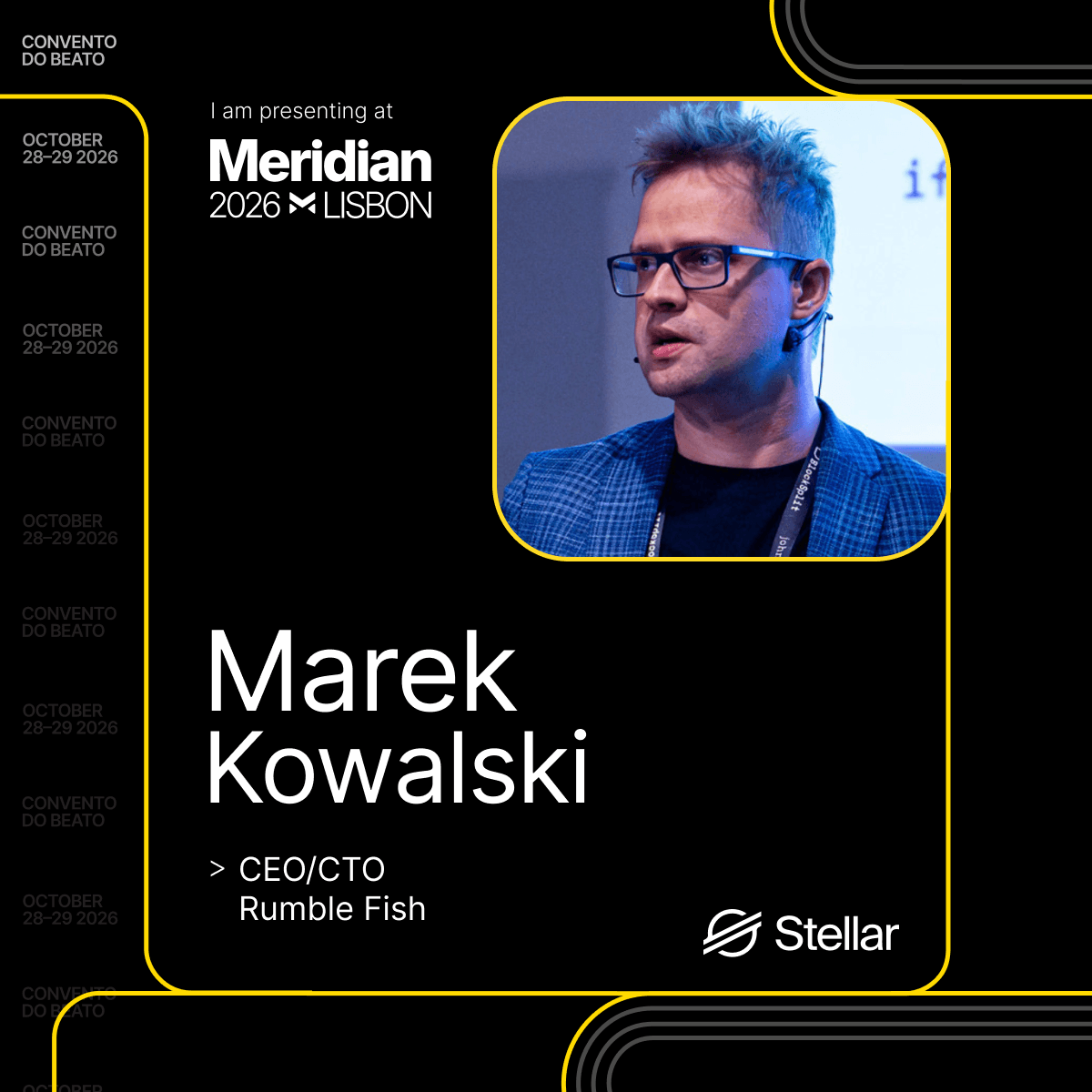
Rumblefish Blog Rumble Fish at Meridian 2026: Marek Kowalski Speaks in LisbonMarek Kowalski, CEO/CTO of Rumble Fish, will speak at [Meridian 2026](https://meridian.stellar.org/), the Stellar Development Foundation's annual conference. Meridian runs October 28–29 at Convento do Beato in Lisbon and brings together the builders, companies, and policymakers working on the Stellar network.
A year ago, almost all of our blockchain work was on EVM chains. Meridian is a good moment to look at what changed since we started building on Stellar.
## Three Stellar Community Fund grants in one year
The Stellar Community Fund has backed Rumble Fish three times. Each grant went to a piece of infrastructure the ecosystem was missing.
[**Soroban Scan.**](https://sorobanscan.rumblefish.dev/) Soroban is Stellar's smart contract platform, and most explorers still show its activity as raw XDR. That tells a developer almost nothing about what a contract did. Soroban Scan decodes contract invocations, nested call trees, CAP-67 events, and swaps into views a person can read. It indexes mainnet from Soroban's launch in late 2023 onward, runs on a Rust and ClickHouse pipeline, and went live in August 2026. The code is open source.
[**Prices API.**](https://sorobanscan.rumblefish.dev/prices-api/) Every DeFi protocol, wallet and portfolio tracker on Stellar needs prices, and each one currently assembles them from scattered sources in different formats. The Prices API gives them one standardized source of real-time and historical price data across all Stellar assets, classic and SEP-41 Soroban tokens alike.
[**x402 facilitator and Bazaar discovery.**](https://www.rumblefish.dev/blog/post/rumble-fish-grant-stellar-x402-facilitator/) x402 turns the HTTP 402 status code into a way for APIs and AI agents to pay for resources per request. A facilitator verifies and settles those payments, and Bazaar lets clients find services that accept them. We're building both for Stellar, so x402 payments can settle on a network designed for fast, low-cost transfers.
## Meet us in Lisbon
Marek will be at Meridian for both days. If you're building on Stellar, planning a Soroban project, or want to talk about indexing, price data, or x402 payments, find him at the conference or [get in touch](https://www.rumblefish.dev/contact) before the event to set up a meeting.
Tickets and the full schedule are on the [Meridian 2026 site](https://meridian.stellar.org/).
Rumble Fish at Meridian 2026: Marek Kowalski Speaks in LisbonMarek Kowalski, CEO/CTO of Rumble Fish, will speak at [Meridian 2026](https://meridian.stellar.org/), the Stellar Development Foundation's annual conference. Meridian runs October 28–29 at Convento do Beato in Lisbon and brings together the builders, companies, and policymakers working on the Stellar network.
A year ago, almost all of our blockchain work was on EVM chains. Meridian is a good moment to look at what changed since we started building on Stellar.
## Three Stellar Community Fund grants in one year
The Stellar Community Fund has backed Rumble Fish three times. Each grant went to a piece of infrastructure the ecosystem was missing.
[**Soroban Scan.**](https://sorobanscan.rumblefish.dev/) Soroban is Stellar's smart contract platform, and most explorers still show its activity as raw XDR. That tells a developer almost nothing about what a contract did. Soroban Scan decodes contract invocations, nested call trees, CAP-67 events, and swaps into views a person can read. It indexes mainnet from Soroban's launch in late 2023 onward, runs on a Rust and ClickHouse pipeline, and went live in August 2026. The code is open source.
[**Prices API.**](https://sorobanscan.rumblefish.dev/prices-api/) Every DeFi protocol, wallet and portfolio tracker on Stellar needs prices, and each one currently assembles them from scattered sources in different formats. The Prices API gives them one standardized source of real-time and historical price data across all Stellar assets, classic and SEP-41 Soroban tokens alike.
[**x402 facilitator and Bazaar discovery.**](https://www.rumblefish.dev/blog/post/rumble-fish-grant-stellar-x402-facilitator/) x402 turns the HTTP 402 status code into a way for APIs and AI agents to pay for resources per request. A facilitator verifies and settles those payments, and Bazaar lets clients find services that accept them. We're building both for Stellar, so x402 payments can settle on a network designed for fast, low-cost transfers.

## Meet us in Lisbon
Marek will be at Meridian for both days. If you're building on Stellar, planning a Soroban project, or want to talk about indexing, price data, or x402 payments, find him at the conference or [get in touch](https://www.rumblefish.dev/contact) before the event to set up a meeting.
Tickets and the full schedule are on the [Meridian 2026 site](https://meridian.stellar.org/). x402 on Stellar: Rumble Fish Receives Its Third Stellar Community Fund Grant
 By Agnieszka Dobosz**Rumble Fish has been awarded a grant from the Stellar Community Fund (SCF #45) to build x402 on Stellar: an open-source payment facilitator and Bazaar discovery layer that lets AI agents find, price, and pay for API endpoints and MCP tools on a per-request basis, in USDC or any SEP-41 asset.**
This is our third SCF award this year. It follows the SCF #41 grant for the Soroban-first Block Explorer, [now live as Soroban Scan,](https://sorobanscan.rumblefish.dev/) and the SCF #42 grant for the [Stellar Prices API.](https://www.rumblefish.dev/blog/post/rumble-fish-grant-stellar-prices-API/) This time we were selected in the RFP Track (Developer Tooling), as one of three teams funded under the x402 Facilitator with Bazaar RFP. You can read the full round results in the [SCF #45 Round Recap.](https://medium.com/stellar-community/scf-45-round-recap-1ecf281821ab?postPublishedType=initial)
## Why AI Agents Need a Different Payment Model
The way we pay for APIs today was designed for humans. You sign up, enter a card, pick a monthly plan, and copy an API key into your config. An AI agent that needs one price quote or one contract lookup can't fill in a signup form, and a $49 monthly subscription for a single call makes no sense for either side. x402 fixes this by reviving the long-dormant HTTP 402 "Payment Required" status code. When an agent calls a paid endpoint, the server responds with payment terms. The agent signs a payment, a facilitator verifies and settles it on-chain, and the request goes through. Payment becomes part of the HTTP request itself, with no accounts or keys involved.
Stellar is a natural home for this pattern. Settlement costs around 0.0023 XLM per transaction, a fraction of a cent, which makes sub-cent pricing per request economically viable in a way it isn't on most other networks.
## What We're Building for x402 on Stellar
The project has four main parts. The facilitator implements the x402 v2 verify, settle, and supported endpoints, accepts any SEP-41 token, and sponsors network fees so payers don't need to hold XLM. The Bazaar is a discovery catalog with ranked search based on relevance, quality score, and curation, so agents can find paid services by describing what they need. An MCP-native discovery server exposes search and paid calls as tools, which means agent runtimes can discover and pay for services without custom integration code. And SDKs in TypeScript and Rust cover both buyers and sellers. The Rust seller crate will be the first seller-side Rust integration in the x402 ecosystem.
We're also adding a usage-based "upto" settlement scheme. The standard exact-price model breaks down for metered services, where the final cost depends on how many rows a query returns or how many tokens a model generates. With upto, the client authorizes a ceiling, and the server settles the actual amount used, never more. A Soroban proxy contract enforces the ceiling, expiry, and single-use nonces on-chain. We're submitting the scheme specification to the x402 Technical Steering Committee so it can become part of the protocol for every network, not only Stellar. Delivery happens in three tranches: a testnet foundation, a feature-complete release with the facilitator on pubnet and an external security audit underway, and a mainnet launch with audit findings resolved, a public conformance report listing settled mainnet transaction hashes, and a developer guide published to the Stellar Developer Docs.
## Real Services Instead of Demo Endpoints
The RFP requires example integrations. We could have built a few synthetic endpoints that return hardcoded JSON, and they would pass every test. They would also tell us very little about how the infrastructure behaves under real use. So we're gating our own production services behind x402 instead. Soroban Scan and the Prices API will both accept x402 payments through the new Rust crate, alongside a canonical Express/TypeScript reference example. Real queries from real users hit edge cases that demo endpoints never will, and the facilitator gets production traffic from day one. It also gives both projects a sustainable monetization path that doesn't depend on grant funding.
## What the Team Says
Marek Kowalski, CEO/CTO of Rumble Fish, sees this grant as the point where the team's earlier Stellar work comes together:
#### "Agents are becoming real consumers of APIs, and they need to pay for what they use without a human filling in forms. Stellar has the fees and the settlement speed to make per-request payments work. We already run production services on Stellar, so we're building this as a team that will use it every day, not as a demo."
## What This Means for the Stellar Ecosystem
Agentic payments are one of the fastest-moving areas in the industry right now, and the networks that offer the best developer experience for them will attract the services agents end up paying for. A facilitator, a discovery layer, MCP support, and SDKs in two languages give Stellar a complete stack for AI agent payments, available as open source for any team to run or build on.
For us, this completes a line of infrastructure work: an explorer that makes Soroban readable, a price API that makes asset data consistent, and now a payment layer that makes both of them, and any other Stellar service, accessible to autonomous agents. You can track the project's progress on the [Stellar Community Fund.](https://communityfund.stellar.org/project/rumble-fish-software-development-rfp-6z9) If you're building on Stellar and need a technical partner who knows the ecosystem inside out, our team is ready to help, so [get in touch.](https://www.rumblefish.dev/contact/)
By Agnieszka Dobosz**Rumble Fish has been awarded a grant from the Stellar Community Fund (SCF #45) to build x402 on Stellar: an open-source payment facilitator and Bazaar discovery layer that lets AI agents find, price, and pay for API endpoints and MCP tools on a per-request basis, in USDC or any SEP-41 asset.**
This is our third SCF award this year. It follows the SCF #41 grant for the Soroban-first Block Explorer, [now live as Soroban Scan,](https://sorobanscan.rumblefish.dev/) and the SCF #42 grant for the [Stellar Prices API.](https://www.rumblefish.dev/blog/post/rumble-fish-grant-stellar-prices-API/) This time we were selected in the RFP Track (Developer Tooling), as one of three teams funded under the x402 Facilitator with Bazaar RFP. You can read the full round results in the [SCF #45 Round Recap.](https://medium.com/stellar-community/scf-45-round-recap-1ecf281821ab?postPublishedType=initial)
## Why AI Agents Need a Different Payment Model
The way we pay for APIs today was designed for humans. You sign up, enter a card, pick a monthly plan, and copy an API key into your config. An AI agent that needs one price quote or one contract lookup can't fill in a signup form, and a $49 monthly subscription for a single call makes no sense for either side. x402 fixes this by reviving the long-dormant HTTP 402 "Payment Required" status code. When an agent calls a paid endpoint, the server responds with payment terms. The agent signs a payment, a facilitator verifies and settles it on-chain, and the request goes through. Payment becomes part of the HTTP request itself, with no accounts or keys involved.
Stellar is a natural home for this pattern. Settlement costs around 0.0023 XLM per transaction, a fraction of a cent, which makes sub-cent pricing per request economically viable in a way it isn't on most other networks.
## What We're Building for x402 on Stellar
The project has four main parts. The facilitator implements the x402 v2 verify, settle, and supported endpoints, accepts any SEP-41 token, and sponsors network fees so payers don't need to hold XLM. The Bazaar is a discovery catalog with ranked search based on relevance, quality score, and curation, so agents can find paid services by describing what they need. An MCP-native discovery server exposes search and paid calls as tools, which means agent runtimes can discover and pay for services without custom integration code. And SDKs in TypeScript and Rust cover both buyers and sellers. The Rust seller crate will be the first seller-side Rust integration in the x402 ecosystem.
We're also adding a usage-based "upto" settlement scheme. The standard exact-price model breaks down for metered services, where the final cost depends on how many rows a query returns or how many tokens a model generates. With upto, the client authorizes a ceiling, and the server settles the actual amount used, never more. A Soroban proxy contract enforces the ceiling, expiry, and single-use nonces on-chain. We're submitting the scheme specification to the x402 Technical Steering Committee so it can become part of the protocol for every network, not only Stellar. Delivery happens in three tranches: a testnet foundation, a feature-complete release with the facilitator on pubnet and an external security audit underway, and a mainnet launch with audit findings resolved, a public conformance report listing settled mainnet transaction hashes, and a developer guide published to the Stellar Developer Docs.
## Real Services Instead of Demo Endpoints
The RFP requires example integrations. We could have built a few synthetic endpoints that return hardcoded JSON, and they would pass every test. They would also tell us very little about how the infrastructure behaves under real use. So we're gating our own production services behind x402 instead. Soroban Scan and the Prices API will both accept x402 payments through the new Rust crate, alongside a canonical Express/TypeScript reference example. Real queries from real users hit edge cases that demo endpoints never will, and the facilitator gets production traffic from day one. It also gives both projects a sustainable monetization path that doesn't depend on grant funding.
## What the Team Says
Marek Kowalski, CEO/CTO of Rumble Fish, sees this grant as the point where the team's earlier Stellar work comes together:
#### "Agents are becoming real consumers of APIs, and they need to pay for what they use without a human filling in forms. Stellar has the fees and the settlement speed to make per-request payments work. We already run production services on Stellar, so we're building this as a team that will use it every day, not as a demo."
## What This Means for the Stellar Ecosystem
Agentic payments are one of the fastest-moving areas in the industry right now, and the networks that offer the best developer experience for them will attract the services agents end up paying for. A facilitator, a discovery layer, MCP support, and SDKs in two languages give Stellar a complete stack for AI agent payments, available as open source for any team to run or build on.
For us, this completes a line of infrastructure work: an explorer that makes Soroban readable, a price API that makes asset data consistent, and now a payment layer that makes both of them, and any other Stellar service, accessible to autonomous agents. You can track the project's progress on the [Stellar Community Fund.](https://communityfund.stellar.org/project/rumble-fish-software-development-rfp-6z9) If you're building on Stellar and need a technical partner who knows the ecosystem inside out, our team is ready to help, so [get in touch.](https://www.rumblefish.dev/contact/)
Check a piece of expert knowledge
Rumble Fish at Meridian 2026: Marek Kowalski Speaks in LisbonMarek Kowalski, CEO/CTO of Rumble Fish, will speak at [Meridian 2026](https://meridian.stellar.org/), the Stellar Development Foundation's annual conference. Meridian runs October 28–29 at Convento do Beato in Lisbon and brings together the builders, companies, and policymakers working on the Stellar network.
A year ago, almost all of our blockchain work was on EVM chains. Meridian is a good moment to look at what changed since we started building on Stellar.
## Three Stellar Community Fund grants in one year
The Stellar Community Fund has backed Rumble Fish three times. Each grant went to a piece of infrastructure the ecosystem was missing.
[**Soroban Scan.**](https://sorobanscan.rumblefish.dev/) Soroban is Stellar's smart contract platform, and most explorers still show its activity as raw XDR. That tells a developer almost nothing about what a contract did. Soroban Scan decodes contract invocations, nested call trees, CAP-67 events, and swaps into views a person can read. It indexes mainnet from Soroban's launch in late 2023 onward, runs on a Rust and ClickHouse pipeline, and went live in August 2026. The code is open source.
[**Prices API.**](https://sorobanscan.rumblefish.dev/prices-api/) Every DeFi protocol, wallet and portfolio tracker on Stellar needs prices, and each one currently assembles them from scattered sources in different formats. The Prices API gives them one standardized source of real-time and historical price data across all Stellar assets, classic and SEP-41 Soroban tokens alike.
[**x402 facilitator and Bazaar discovery.**](https://www.rumblefish.dev/blog/post/rumble-fish-grant-stellar-x402-facilitator/) x402 turns the HTTP 402 status code into a way for APIs and AI agents to pay for resources per request. A facilitator verifies and settles those payments, and Bazaar lets clients find services that accept them. We're building both for Stellar, so x402 payments can settle on a network designed for fast, low-cost transfers.

## Meet us in Lisbon
Marek will be at Meridian for both days. If you're building on Stellar, planning a Soroban project, or want to talk about indexing, price data, or x402 payments, find him at the conference or [get in touch](https://www.rumblefish.dev/contact) before the event to set up a meeting.
Tickets and the full schedule are on the [Meridian 2026 site](https://meridian.stellar.org/).Blockchain
x402 on Stellar: Rumble Fish Receives Its Third Stellar Community Fund GrantBy Agnieszka DoboszBlockchain
Have an idea?
Let’s work
together!We will answer any questions you may have related to your startup journey!Do you prefer e-mail?
hello@rumblefish.pl
together!We will answer any questions you may have related to your startup journey!Do you prefer e-mail?
hello@rumblefish.pl


RUMBLEFISH POLAND SP Z O.O.Filipa Eisenberga 11/3 31-523 Kraków, Polska
NIP: 6772425725REGON: 368368380KRS: 0000696628
P: +48 601 265 364E: hello@rumblefish.dev
Copyright © 2026 RumblefishServicesBlockchain Software DevelopmentZero-Knowledge Proof DevelopmentXRPL Blockchain DevelopmentStellar Product DevelopmentSmart Contract DevelopmentDeFi DevelopmentAWS Cloud SolutionsAI Chat Assistant DevelopmentSynthetic Data GenerationFintech Software DevelopmentDedicated Development TeamsWeb developmentMobile developmentIT Services for startupUI/UXRust Web App DevelopmentView all services
CareersJoin Our Team


